Meat and dairy are the food system. Vegan is not understood.
Animal products are central to the food system and vegan options are scarce even in tourist areas. There is no infrastructure to fall back on. Success requires exceptional preparation and a willingness to accept very limited options.
Tools for this level
How these destinations are chosen
Botswana
Among the world's highest per-capita beef consumption; lodges best option
Safari & IslandGaborone has sufficient supermarket infrastructure for self-catering. Safari lodges in the Okavango Delta and Chobe National Park consistently accommodate dietary requirements with advance notice. This is the most reliable strategy for vegan travellers. Beef consumption here is among the highest per capita globally; it is culturally central.
Côte d'Ivoire
French barrier; fish and palm oil in most sauces
Organised but LimitedAbidjan's Plateau district has international restaurants. Alloco (fried plantains) is the safest street food option. Attiéké (cassava couscous) is served with fish by default. Order it without the accompaniment ("sans poisson, sans sauce"). French is essential outside Abidjan.
Cameroon
Bouillon in all sauces; crayfish invisible; Anglophone regions easiest
Bouillon & Fish PasteBuea and Limbe in the Anglophone Southwest are the most navigable regions. Ndolé (bitter leaf stew) made with groundnuts rather than meat is a genuine vegan option when specifically requested. The default version contains beef and crayfish. Always ask for the preparation without bouillon cubes as well.
Benin
Bouillon and smoked fish in virtually all sauces; French barrier; minimal vegan awareness
Economic BarriersCotonou is the most navigable area. Ablo (steamed rice cake) and aklui (millet porridge) are naturally vegan staples. Outside these basics, most sauces contain smoked fish and bouillon. Fresh fruit from markets is the most reliable safe option; bring your own supplies for anything more complex.
Togo
Near-identical to Benin; smoked fish and bouillon in most sauces
Economic BarriersLomé's beach strip has tourist-facing restaurants that accommodate with advance notice. Akume (corn porridge) with gboma dessi (spinach sauce made without fish) is the reliable vegan staple combination. Ask specifically for the sauce without fish and without bouillon, as both are added by default.
Republic of the Congo
Bushmeat and fish as default; bouillon culture; only 5 HappyCow listings nationally
Economic BarriersBrazzaville has the country's only meaningful restaurant infrastructure, and even there options are extremely limited. Only 5 HappyCow listings exist for the entire country. The practical approach is self-catering from Marché Total. Fresh fruit and bread are your most reliable daily options; plan supplies before arrival.
Gabon
1 HappyCow listing nationally; bushmeat and French barrier
Economic BarriersLibreville has international supermarkets (Score and Mbolo) where self-catering is the primary strategy. Restaurant culture is built around bushmeat and seafood; only 1 HappyCow listing exists nationally. Bring dried goods and plan around what fresh produce is available in the markets.
Angola
Portuguese barrier; fish deeply embedded; tourist vegan infrastructure essentially absent
Economic BarriersLuanda's Ilha district and Miramar area have international restaurants where accommodation is possible with advance notice. The Portuguese-influenced cuisine is built around fish and meat. Self-catering from Shoprite or Kero supermarkets is the most reliable daily strategy. Plan supplies before leaving Luanda for any other region.
Bhutan
Ema datshi cheese dish is at every meal; dairy woven into Buddhist cooking tradition
Hidden IngredientsEma datshi, melted chilli and cheese, appears at almost every meal; even the Buddhist monastic vegetarian tradition here is dairy-heavy rather than plant-based. Explain you cannot eat any animal product including eggs and dairy before you arrive at a meal; your guide can communicate this in Dzongkha where English is limited. Thimphu's tourist-facing restaurants have the most experience with plant requests. Bring protein-dense snacks; altitude and constrained supply mean variety is genuinely limited.
Timor-Leste
Fish sauce invisible in all cooking; limited post-independence food infrastructure
Hidden IngredientsFish sauce and dried shrimp are the invisible seasoning base of Timorese cooking; dishes described as vegetable-based almost always use both. Dili has a small restaurant scene driven by NGO and expat demand that is the most navigable option. Rice with simple vegetables is your safe default outside the capital. Portuguese and Tetum are the operating languages; basic communication in either goes a long way.
Mongolia
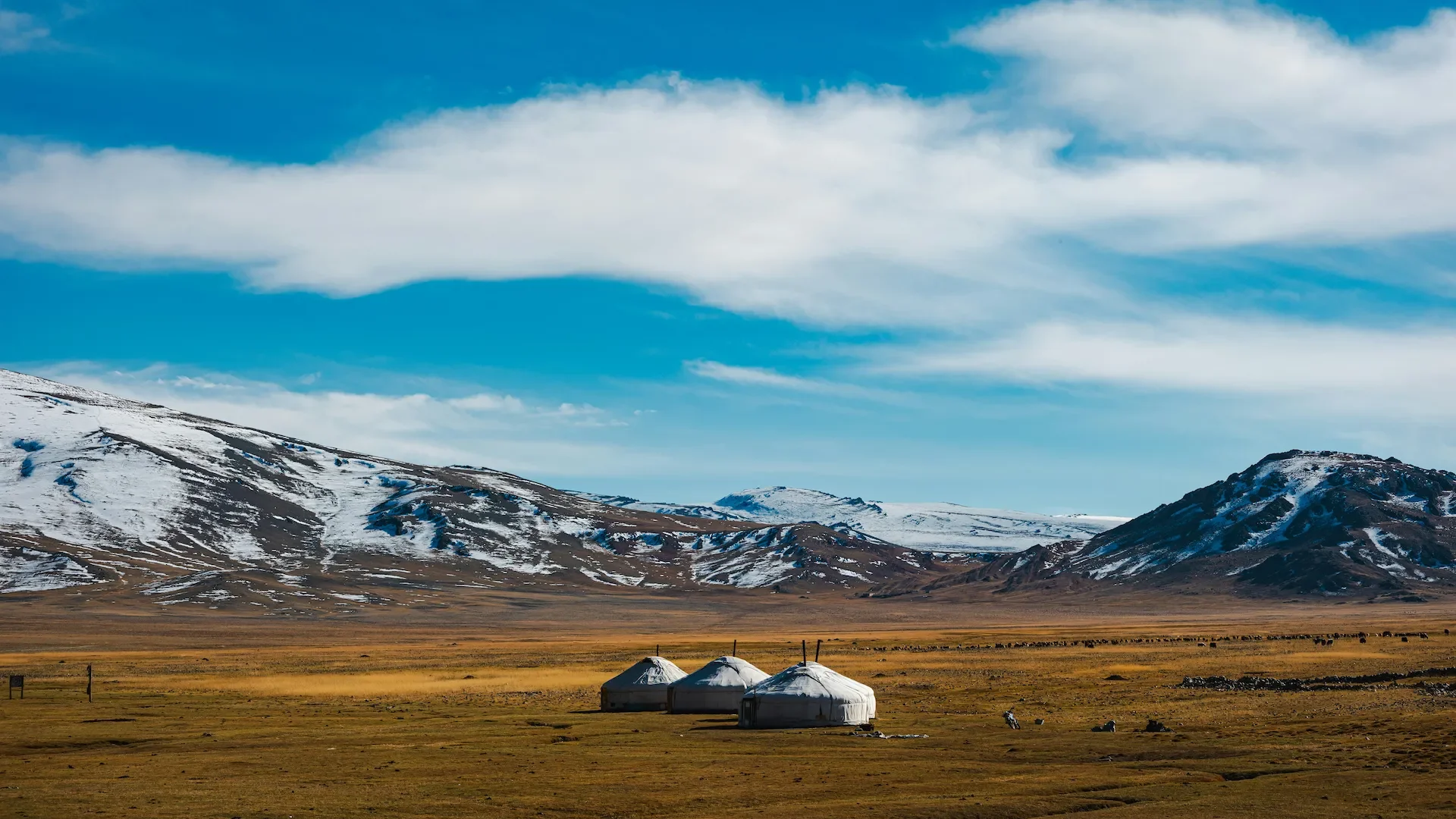
Nomadic meat and dairy culture; animal products are the entire food system outside cities
Meat CultureTsuivan noodles and khorkhog stone-cooked lamb define Mongolian food identity at a national level, and outside Ulaanbaatar the food system is almost entirely meat and dairy. The capital has a small but functional plant-based dining scene; go directly to the identified HappyCow listings on arrival. For any travel into the steppe or ger camps, carry food from the city; outside UB, plant-based options are essentially absent.
Kazakhstan
Horse meat and fermented mare's milk central; steppe geography limits crop diversity
Meat CultureBeshbarmak, boiled horse or lamb on flat pasta, is the national dish and the defining feature of every significant social occasion. Almaty is genuinely manageable; well-stocked supermarkets and a growing plant-based scene make city travel viable. The challenge scales sharply with distance from Almaty and Astana; in rural and steppe areas, plant-based food is essentially absent and you are dependent on bread, tea, and whatever seasonal vegetables are locally grown.
Uzbekistan
Plov cooked in lamb fat at every gathering; animal fat invisible in most dishes
Hidden IngredientsPlov, rice cooked in cottonseed or lamb fat with mutton, is the foundation of Uzbek food identity and appears at every celebration and Friday gathering. Samarkand and Tashkent have growing tourist-aware cafes, but even these often use animal fat in preparation without disclosure. Lepyoshka bread is reliably vegan. Dried fruits and nuts are a genuine regional asset; excellent dried apricots, figs, and walnuts available at every bazaar.
Kyrgyzstan
Kumiss hospitality culture; mountain livestock system defines everything outside Bishkek
Meat CultureKumiss, fermented mare's milk, is the drink of hospitality and declining it carries social meaning in Kyrgyz culture. Bishkek's Russian-influenced cafe scene and a small number of plant-aware restaurants make the capital manageable. Outside it, the food system is built entirely around meat and dairy. Bread, jam, and black tea are the reliable options in rural areas; carry your own protein for any journey into the mountains.
Tajikistan
Qurutob dairy base in national dish; Pamir altitude eliminates most agriculture
Economic BarriersQurutob, flatbread soaked in whey-based sauce, is technically plant-based in form but almost always contains kurt, dried sour balls of dairy. Dushanbe's small restaurant scene has limited but navigable options. Outside the capital, the food system is genuinely constrained: altitude, limited arable land, and subsistence patterns mean variety is near-absent. If you are travelling the Pamir Highway, bring emergency provisions from Dushanbe; resupply points are too sparse and too limited to rely on.
Turkmenistan
State closure blocks all imports; lamb-based diet with no concept of plant-based eating
Economic BarriersThe country's isolation from international supply chains means vegan products are essentially non-existent even in Ashgabat, and chorba soup is invariably lamb-based throughout the country. Veganism is not a known concept here; explain your needs using a show-don't-tell approach with written descriptions in Russian or Turkmen. Plain rice, bread, and seasonal vegetables are your realistic options at every meal. Pre-pack as much as possible from your country of entry; the border-to-border transit approach is the most viable strategy.
Lesotho
Highland altitude eliminates most crops; meat and dairy are status foods at every gathering
Economic BarriersPapa, the stiff maize porridge, is reliably vegan and eaten daily; it is the one constant you can rely on throughout Lesotho. The highland climate severely limits agriculture beyond maize, sorghum, and root vegetables. Maseru has limited supermarket options that may include some South African imported plant-based products. Meat, particularly beef and mutton, is a cultural status marker and a dietary default at every social occasion; the challenge is relational as much as logistical.
Eswatini
Traditional sishwala paired with emasi dairy at every meal; Swazi feast culture strong
Meat CultureSishwala, thick sorghum porridge, and emasi, fermented dairy, are the traditional staple pairing; the porridge is vegan but the cultural expectation is that it accompanies dairy or meat. Mbabane and Manzini benefit from South African supply chain access, meaning some plant-based product range is available in supermarkets. The South African border proximity is your best practical asset; stocking up in South Africa before entering Eswatini significantly improves your options.
Sierra Leone
Cassava leaf stew contains fish broth as base; post-conflict rebuilding limits all infrastructure
Hidden IngredientsCassava leaf stew, one of Sierra Leone's most important dishes, almost always contains fish or meat broth in its base; the vegetable content is real but the preparation is not plant-based by default. Freetown's gradually rebuilding restaurant scene has some expat and NGO-driven options. Rice is the reliable vegan staple everywhere. English is official and widely spoken, removing the communication barrier that makes most West African destinations harder to navigate.
Liberia
Fish and meat as foundation seasoning throughout; infrastructure gap post-civil conflict
Economic BarriersJollof rice and cassava-based dishes form the staple base and can be vegan on explicit request, but fish and meat are woven into most cooking as foundation seasoning rather than visible ingredient. Monrovia has limited but navigable options in the expat-serving restaurant cluster near the waterfront. English is official and widely spoken; communication is genuinely not a barrier here, which is a significant advantage relative to most West African destinations at this level.
Mauritania
Nomadic camel milk and meat diet; desert geography eliminates most crop agriculture
Subsistence EconomyThiéboudienne, the rice and fish dish shared across West Africa, is the default meal; the nomadic interior relies heavily on camel milk and meat as the food system's protein foundation. Nouakchott's larger supermarkets carry some imported goods, and rice with vegetables is achievable in the capital. The country's Saharan geography severely limits fresh produce availability across most of the territory. Arabic and Hassaniya Arabic are the operating languages; French is used formally and English is essentially absent.
Burundi
Beans and cassava are genuine staples; meat is prestige food served to all guests automatically
Economic BarriersUbugali, the stiff cassava porridge, and beans are the traditional staple pair; both reliably vegan and widely available at the subsistence level. The challenge is relational: poverty means meat is a prestige food served to guests at every opportunity, and declining it requires careful cultural navigation. Bujumbura and Gitega have limited but improving food options driven by the small NGO sector present in both cities.
Malawi
Usipa dried lake fish in every relish; nsima porridge is the reliable constant
Hidden IngredientsNsima, the maize porridge, is eaten at every meal and is always vegan; it may be the most reliably accessible staple in all of Level 7. The relish served alongside it, however, is almost always usipa, the small dried lake fish used as invisible seasoning throughout Malawian cooking. Requesting vegetables only with your nsima is understood in most places and usually achievable. Lilongwe and Blantyre have basic supermarket range with some imported goods.
Chad
Landlocked subsistence economy; no commercial food infrastructure outside the capital
Subsistence EconomyBoule, a millet or sorghum ball, is the subsistence staple and is reliably plant-based throughout Chad. The food system outside N'Djamena is almost entirely subsistence-level with no commercial infrastructure. The capital has a very limited market with some imported goods from neighbouring countries. French and Arabic are the operating languages; English is absent. Chad is not a tourism destination in any conventional sense and the concept of dietary restriction is essentially unknown outside international NGO and humanitarian contexts.
Djibouti
Fish and goat dominate every menu; desert geography eliminates local agriculture entirely
Subsistence EconomyLaxoox, the spongy fermented flatbread, is a genuine vegan staple and widely available at every meal throughout Djibouti. The food system beyond it is heavily oriented toward fish and goat, reflecting both Somali and French colonial culinary heritage. Djibouti City has French supermarket access that is genuinely useful; larger outlets carry some plant-based range that would not exist without the French military and expat presence. French is the operating language alongside Somali and Afar.
Explore Other Levels